How to Recover If You Lost Money in a Bad Investment

Losing money in a bad investment can feel devastating—both financially and emotionally. Whether it was a stock crash, crypto dip, real estate deal gone wrong, or even a scam, the pain is real. But here’s the good news: you can recover—mentally, emotionally, and financially.
In this guide, we’ll break down everything you need to understand your losses, learn from them, take control of your finances, and move forward with a smarter strategy.
🔹 1. Acknowledge the Loss Without Shame
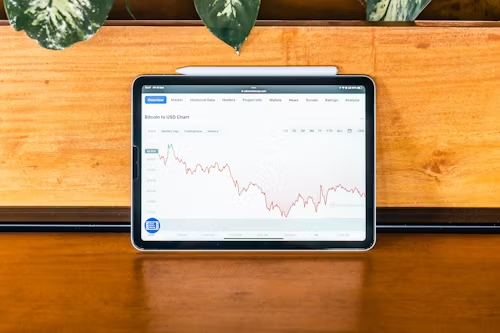
The first step in recovering from a bad investment is to accept what happened. It might feel like a failure, but every successful investor has lost money at some point.
Key Tip: Don’t ignore the loss or pretend it didn’t happen. Face it head-on. This is the first step toward growth.
Ask yourself:
- How much did I lose?
- Was it because of a risky decision or bad advice?
- Was it an external factor (market crash) or internal (poor planning)?
Remember: Owning the mistake gives you power. Check Out to Avoid These 5 Costly Mistakes and Start Investing Smarter Today

🔹 2. Stop the Bleeding: Cut Further Losses
If the investment is still draining your resources or has no potential to recover, it’s time to cut your losses.

Highlighted: Exit Strategy
An exit strategy is crucial. Ask:
- Can this investment still grow in the future?
- Is it better to sell now and reinvest somewhere smarter?
- Am I holding on due to ego or emotion?
Example:
If you invested in a penny stock that has dropped 80% and shows no signs of recovery, holding on may just delay your healing.
Check out this guide: From Zero to Investor: 10 Beginner Strategies to Build Wealth Fast.
Key Tip: Don’t throw more money into a sinking ship. Stop and reassess.
🔹 3. Don’t Chase Losses With Riskier Bets
After a loss, it’s tempting to try to “win it back” quickly by investing in high-risk schemes. This is called revenge investing—and it usually leads to more losses.

Important: Loss + Desperation = Disaster
Instead:
- Take a break before making new financial decisions.
- Rebuild slowly and wisely.
- Focus on sustainable, long-term investing, not quick wins.

🔹 4. Assess Your Financial Health

Now it’s time to take a full look at your financial picture. The goal is to stabilize before rebuilding.
Ask:
- What is my monthly income and expense?
- Do I have an emergency fund?
- Do I have other debts to manage?
Highlight: Financial Reset . Check out Top 5 Free Budgeting Tools to Help You Save More.
Use tools like spreadsheets, budget apps (e.g., YNAB, Mint), or even consult a financial advisor. A solid foundation is critical before jumping back into investing.
🔹 5. Learn the Lessons (Don’t Skip This!)
Every loss holds a valuable lesson—if you’re willing to look for it. Reflect deeply:

- Did I follow a trend without research?
- Did I ignore red flags?
- Was I emotionally invested instead of logically?
Key Tip: Treat the loss like tuition—you paid to learn something.
Example:
If you lost money on a crypto coin that promised huge returns but had no real utility, your lesson is: never invest based on hype.
Journal your lessons. Turn pain into power. Learn How to Start Investing with Just $500 a Month.
🔹 6. Rebuild Your Confidence (And Mindset)

It’s not just your money that needs recovery—your confidence and mindset do too.
Highlight: Growth Mindset
- Surround yourself with empowering financial voices (podcasts, books).
- Avoid negative self-talk like “I’m bad with money.”
- Set small, achievable goals to regain momentum.
Try This:
Start saving ₹500 or $20 a week. Seeing small wins builds belief. These 10 daily saving habits make saving feel easy, consistent, and rewarding
🔹 7. Diversify Before You Reinvest

Before you pour your profits back into the same basket, pause.
Wealth grows with balance, not blind repetition.
Whether it’s stocks, real estate, or your side hustle, reinvestment is powerful — but diversification is protection. It helps you build a future that’s steady, not shaky.
“Don’t just grow your money — spread its roots.
A tree with deep, wide roots survives every storm.”
🌱 Explore new sectors. Try low-risk + high-growth options.
Smart investors don’t chase returns — they build resilience.
When you’re ready to invest again, the number one rule is: diversify.
Don’t put all your eggs in one basket.
A diversified portfolio spreads risk across:
- Stocks (large cap, mid cap, index funds)
- Real estate (REITs)
- Bonds or debt funds
- Gold or commodities
- Mutual funds or ETFs
Highlighted Tip: Always know why you’re investing and what the risk is.
🔹 8. Set New Investment Rules for Yourself

To avoid repeating the same mistakes, set non-negotiable rules for future investments.
Here are some smart ones:
- Never invest money you can’t afford to lose.
- Always do your own research (DYOR).
- Set a target entry and exit point.
- Stick to your risk level (don’t invest aggressively if you’re risk-averse).
Tip: Write your rules down and refer to them before every investment.
🔹 9. Seek Guidance (If Needed)
There’s no shame in asking for help. In fact, smart investors consult experts.
Consider:
- A certified financial advisor (fee-only is ideal)
- Trusted investing communities or platforms
- Books like The Intelligent Investor or I Will Teach You to Be Rich
Highlighted Advice: Smart recovery often includes smart support.
🔹 10. Start Again—Wiser, Not Weaker
Now comes the most important step: starting again.
You’ve:
✅ Acknowledged your loss
✅ Learned from it
✅ Built emotional resilience
✅ Reassessed your finances
✅ Gained knowledge
✅ Developed a new strategy
This time, you’re not starting from scratch—you’re starting from experience.
Small Steps to Begin Again:
- Open a low-risk investment (like an index fund or SIP).
- Set a monthly auto-invest amount.
- Track progress quarterly.
Quote to Remember:
“Failure is not the opposite of success, it’s part of success.”
🔹 11. Bonus: Emotional Healing After Financial Loss
Money losses hit deep because they affect our sense of security, identity, and control.
Do this:
- Talk to someone (a friend, mentor, or therapist).
- Practice gratitude—what do you still have?
- Celebrate small wins again.
Highlighted Wisdom: Healing is part of recovery too.
Conclusion: You’re Not Alone
Every seasoned investor has a story of loss. What separates successful ones is not perfection—it’s resilience.
If you’ve lost money, you’re still in the game. The worst is not behind you, it’s what you do next that matters.
✅ Quick Recap of Key Recovery Tips
- Acknowledge your loss.
- Stop the bleeding—exit non-recoverable investments.
- Don’t chase losses emotionally.
- Reset your financial foundation.
- Learn your lessons and write them down.
- Diversify before reinvesting.
- Create rules for the future.
- Get help if you need it.
- Rebuild mindset and take action again.